

Pictures of Jhelum
Etymology | History |
Tribes and Clans | Demography |
City | Topography |
River Jhelum |
Agriculture | Flora and Fauna |
Important Sites |
Transportation | Journalism in Jhelum
| Education | Hospitals |
Major Industries |
Notable People |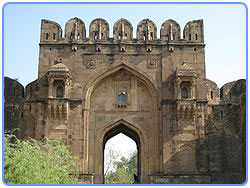 Jhelum District is in the Punjab province of Pakistan. According the 1998
census the district had a population of 936,957, of which 31.48% were urban.
The district of Jhelum stretches from the river Jhelum almost to the Indus.
Salt is quarried at the Mayo mine in the Salt Range. There are two
coal-mines, the only ones worked in the province, from which the
North-Western railway obtains part of its supply of coal. The chief centre
of the salt trade is Pind Dadan Khan. Jhelum is known for providing a large
number of soldiers to the British and later to the Pakistan armed forces due
to which it is also known as city of soldiers or land of martyrs and
warriors. The district is crossed by the main line of the
Jhelum District is in the Punjab province of Pakistan. According the 1998
census the district had a population of 936,957, of which 31.48% were urban.
The district of Jhelum stretches from the river Jhelum almost to the Indus.
Salt is quarried at the Mayo mine in the Salt Range. There are two
coal-mines, the only ones worked in the province, from which the
North-Western railway obtains part of its supply of coal. The chief centre
of the salt trade is Pind Dadan Khan. Jhelum is known for providing a large
number of soldiers to the British and later to the Pakistan armed forces due
to which it is also known as city of soldiers or land of martyrs and
warriors. The district is crossed by the main line of the
North-Western railway, and also traversed along the south by a branch line.
It is located in the north of the Punjab province, Jhelum district is
bordered by Sargodha to its south, Gujrat and the Jhelum River to its south
and east, Chakwal to its west, Mirpur to its east, and Rawalpindi to its
north.
Search
Jhelum On Satellite Map
Places of Interest
| Hotels |
Eating & Dining
| Parks & Gardens |
Educational Institutes |
Hospitals |
Sport- Centers |
Banks |
ATM |
Fuel Stations |
CNG Stations |
Police Stations |
Shopping /Trade
Etymology Anjum Sultan Shahbaz recorded some stories of the name Jhelum in his book
Tareekh-e-Jhelum as
Anjum Sultan Shahbaz recorded some stories of the name Jhelum in his book
Tareekh-e-Jhelum as
"Many writers have different opinions about the name of Jhelum. One
suggestion is that in ancient days Jhelum was known as Jalham. The word
Jhelum is reportedly derived from the words Jal(pure water) and Ham (snow).
The name thus refers to the waters of a river (flowing besides the city)
which have their origins in the snow-capped Himalayas.
However some writers believe that when "Dara-e-Azam" reached a certain place
on the river bank after winning many battles, he fixed his flag at that
place and called it "Ja-e-Alam" which means "Place of the Flag". With the
passage of time it became Jhelum from "Ja-e-Alam".
According to tradition, Hazrat Saeed Bin Abi Waqas, brother of Hazrat Saad
Bin Abi Waqas, was sent to China to preachIslam, during his journey he
arrived at the city of Jhelum, he saw the reflection of a city in the river
and said (this is Jheelum), which means "City besides the river, in full
moonlight " Ahmed Shah Abdali also used "Jheelum" in place of Jhelum and
"Harianâ€