
Location | History
| Historic Remains | Geography
| Politics | Economy / Industry
| Education | Demography
| Culture | Major Tribes
| Transport Gujrat is a district of Punjab Province in Pakistan. It is an ancient
district located in between two
Gujrat is a district of Punjab Province in Pakistan. It is an ancient
district located in between two
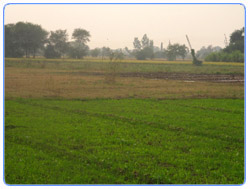
famous rivers, the Jhelum and Chenab. Because of its proximity with the
rivers the land is good for cultivation with rice and sugar cane as main
crops. It is bounded on the northeast by Mirpur, on the northwest by the
River Jhelum which separates it from Jhelum District, on the east and
southeast by the Chenab River, separating it from the districts of
Gujranwala and Sialkot, and on the West by Mandi Bahauddin. District Gujrat
is spread over an area of 3,192 square kilometres, and is divided into three
tehsils, Gujrat, Kharian, and Sarai Alamgir. There are many historic
villages and towns in the district such as Chakdina, Kunjah, Dinga.
Search
Gujrat on Satellite Map
Places of Interest
| Hotels |
Eating & Dining
| Parks & Gardens |
Educational Institutes |
Hospitals |
Sport Centers |
Banks |
ATM |
Fuel Stations |
CNG Stations |
Police Stations |
Shopping /Trade
Location
Gujrat is situated on the bank of Chenab River, situated about 120 KM north
of Lahore.Prominent nearby locations include Jhelum, Gujranwala, Mandi
Bahauddin, Sialkot and Bhimber-Azad Kashmir. The city is surrounded by many
villages which supply a significant Labor to the local market.
History
Ancient History
According to the Imperial Gazetteer of India:
" GUJRAT Town itself is a place of some antiquity, and the District bounds
in ancient sites.The district formed part of the kingdom of Porus, who was
defeated by Alexander, probably in the Karri plain beyond the Jammu border,
in July, 326 B.C. ; but four years later was conquered by Chandragupta
Maurya in the national rising which took place on the death of Alexander. It
remained under the Mauryas until shortly after the death of Asoka in 231,
and about forty years later came under the sway of Demetrius the Graeco-Bactrian.
The overthrow of the Bactrians by the Parthians in the latter half of the
second century brought another change of rulers, and the coins of the
Indo-Parthian Maues (c. 120 B. c.), who is known to local tradition as
Raja Moga, have been found at Mong. At the end of the first century A.
D., ie whole of the Punjab was conquered by the Yueh-chi. For several
hundred years nothing is known of the history of the District, except that
between 455 and 540 it must have been exposed to the ravages of the White
Huns. Dr. Stein holds that the District formed part of the kingdom of
Gurjara, which, according to the Rajatarangini, was invaded between 883 and
902 by Sankara Varman of Kashmir, who defeated its king Alakhana. This may
be the Ali Khan to whom tradition ascribed the refounding of GUJRAT.â€